Temperature-Sensing Technologies are becoming increasingly important as machines, buildings, vehicles, medical devices, factories, and electronic systems need to understand changes in heat. Instead of simply showing a temperature reading, modern sensors can convert thermal changes into electrical or digital signals that computers can process, analyze, and use for automated decisions. Temperature sensors can measure heat through different physical principles, including changes in electrical resistance, thermoelectric effects, and infrared radiation. NIST identifies temperature as one of the many physical quantities that modern sensors can measure across applications ranging from electronics to medicine and communications.
As connected devices become more intelligent, the ability to detect even small temperature changes can provide valuable information. A temperature signal can indicate that a machine is overheating, a battery is changing condition, a building needs different cooling, or an electronic component is operating outside its expected range.
Table of Contents
- What Are Temperature-Sensing Technologies?
- Thermistor Temperature-Sensing Technologies
- RTD Temperature-Sensing Technologies
- Thermocouple Temperature-Sensing Technologies
- Infrared Temperature-Sensing Technologies
- Pyroelectric Temperature-Sensing Technologies
- Thermoelectric Temperature-Sensing Technologies
- Semiconductor Temperature-Sensing Technologies
- Fiber-Optic Temperature-Sensing Technologies
- Comparison of Temperature-Sensing Technologies
- Future of Temperature-Sensing Technologies
What Are Temperature-Sensing Technologies?
Temperature-Sensing Technologies are systems that detect thermal conditions and convert them into measurable signals. Depending on the sensor design, a change in temperature can produce a change in electrical resistance, voltage, current, infrared radiation, or another measurable property.
That signal can then be processed by electronics. In a simple device, the signal might appear as a temperature number on a display. In a smart system, it can be sent to a microcontroller, computer, cloud platform, or artificial intelligence system.
This makes temperature sensing much more than simply checking whether something is hot or cold. It can become a source of digital information for monitoring and automation.
1. Thermistor Temperature-Sensing Technologies
One of the widely used Temperature-Sensing Technologies is the thermistor. Thermistors are temperature-sensitive resistive devices whose electrical resistance changes as temperature changes.
NTC, or negative temperature coefficient, thermistors generally decrease in resistance as temperature increases. This predictable relationship allows electronic circuits to convert resistance changes into temperature information.
How Thermistor Temperature-Sensing Technologies Work
A thermistor can be connected to an electronic circuit that measures its resistance. The circuit then converts that measurement into a temperature value.
Because thermistors can be compact and relatively simple to integrate, they are useful in electronics, appliances, battery systems, and environmental monitoring.
Research summarized by NIST identifies NTC thermistors among the major categories of temperature sensors alongside RTDs and thermocouples.
2. RTD Temperature-Sensing Technologies
Resistance temperature detectors, commonly called RTDs, are another important category of Temperature-Sensing Technologies.
RTDs work by measuring how the electrical resistance of a material changes with temperature. Platinum is widely used in precision resistance thermometry because its temperature-resistance relationship can be characterized accurately.
Why RTD Temperature-Sensing Technologies Matter
RTDs are particularly useful where stable and accurate temperature measurements are important. They can be found in industrial systems, scientific equipment, manufacturing processes, and other applications where temperature needs to be measured reliably.
The basic idea is simple: temperature changes the resistance, electronics measure the resistance, and software converts that measurement into temperature information.
This demonstrates an important principle behind modern sensing: a physical change can become a digital signal through electronics and calibration.
3. Thermocouple Temperature-Sensing Technologies
Thermocouples use a different physical principle. When two different conductive materials are joined, a temperature difference can produce a measurable thermoelectric voltage.
That voltage can be measured and interpreted as temperature.
Industrial Temperature-Sensing Technologies
Thermocouples are useful in environments where temperature ranges can be demanding, including industrial equipment, manufacturing processes, ovens, furnaces, and engines.
Their ability to convert temperature differences into electrical signals makes them valuable for systems that need direct electronic monitoring.
Thermoelectric effects are also studied extensively by NIST because they enable conversion between thermal and electrical energy and are important in sensing, energy systems, and materials research.
4. Infrared Temperature-Sensing Technologies
Not every temperature measurement requires physical contact. Temperature-Sensing Technologies based on infrared radiation can estimate temperature remotely by detecting thermal radiation emitted by objects.
Infrared thermometers and thermal imaging systems use this principle to observe temperature without touching the target.
Contactless Temperature-Sensing Technologies
Contactless sensing can be valuable when an object is moving, extremely hot, difficult to reach, or sensitive to physical contact.
For example, infrared systems can monitor industrial equipment, electrical components, machinery, and other objects from a distance.
NIST has developed advanced infrared temperature measurement systems and notes that infrared radiation thermometers can use pyroelectric sensors to convert heat-related energy into electrical signals.
This makes infrared sensing especially interesting for automated systems because the sensor does not necessarily need to physically touch the object being measured.
5. Pyroelectric Temperature-Sensing Technologies
Pyroelectric devices provide another fascinating approach to Temperature-Sensing Technologies.
Certain materials generate an electrical response when their temperature changes. This phenomenon is known as the pyroelectric effect.
From Heat Changes to Electrical Signals
When infrared radiation heats a pyroelectric material, its temperature changes. That thermal change can produce an electrical signal that can be measured by electronics.
NIST explains that pyroelectric detectors can convert infrared-induced temperature changes into electrical signals and are used in infrared detection and radiometry.
This is a powerful example of how an invisible thermal event can become measurable electronic information.
6. Thermoelectric Temperature-Sensing Technologies
Thermoelectric systems are also important in the world of Temperature-Sensing Technologies because temperature differences can generate electrical effects.
The Seebeck effect is one of the fundamental thermoelectric effects. When different parts of a thermoelectric material experience different temperatures, an electrical potential can develop.
Turning Temperature Differences Into Signals
This principle allows temperature gradients to be associated with electrical measurements.
Thermoelectric technology has applications extending beyond sensing. NIST notes that thermoelectric effects are used for energy conversion, waste-heat recovery, refrigeration, remote sensing, and other technologies.
This creates an interesting connection between temperature measurement and energy technology.
7. Semiconductor Temperature-Sensing Technologies
Modern electronics have also made semiconductor-based Temperature-Sensing Technologies extremely useful.
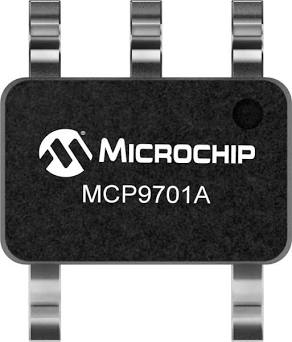
Semiconductor temperature sensors can be integrated into electronic circuits and microchips. Their electrical characteristics change predictably with temperature, allowing electronics to estimate the thermal condition of a device.
Smart Electronics and Temperature Signals
This is especially useful in computers, smartphones, industrial electronics, power systems, and other connected devices.
A semiconductor sensor can continuously provide temperature information to a processor. The system can then respond when temperature rises beyond a defined operating range.
For example, electronics can reduce performance, activate cooling, change power consumption, or trigger an alert when thermal conditions become abnormal.
This turns temperature sensing into an active part of automated control rather than just a measurement.
8. Fiber-Optic Temperature-Sensing Technologies
Fiber-optic systems offer another interesting direction for Temperature-Sensing Technologies.
Instead of relying entirely on electrical wires at the measurement point, optical fibers can be used to detect temperature-related changes along a sensing path.
Distributed Temperature-Sensing Technologies
One advantage of optical sensing is the possibility of monitoring temperature across locations rather than relying on only one measurement point.
This can be useful in environments where electromagnetic interference, long distances, or difficult installation conditions create challenges for conventional electrical sensors.
Fiber-optic sensing is part of a broader trend toward sensors that can collect information from places where traditional electronics may be difficult to deploy.
Temperature-Sensing Technologies Comparison Table
| Technology | Main Principle | Contact Required | Typical Strength |
|---|---|---|---|
| Thermistor | Resistance change | Usually yes | Compact sensing |
| RTD | Resistance change | Usually yes | Accurate measurement |
| Thermocouple | Thermoelectric voltage | Usually yes | Wide temperature applications |
| Infrared Sensor | Thermal radiation | No | Contactless measurement |
| Pyroelectric Sensor | Temperature-change response | No | Infrared detection |
| Thermoelectric Sensor | Thermal-to-electrical effect | Depends on design | Temperature gradients |
| Semiconductor Sensor | Electronic characteristics | Usually yes | Easy chip integration |
| Fiber-Optic Sensor | Optical response | No electrical contact at sensing point | Remote/distributed sensing |
Illustrative Temperature Signal Flow
A modern thermal monitoring system can follow a simple process:
Temperature Change → Sensor Response → Electrical/Optical Signal → Signal Processing → Digital Data → Automated Action
For example, when a machine becomes hotter than expected, a sensor detects the change. Electronics convert that physical response into a measurable signal. A controller processes the information and can then send an alert or activate cooling.
Illustrative Technology Comparison Graph
The following values are illustrative only and are not market-share or performance statistics. They show conceptually how different sensor categories can contribute to modern digital temperature monitoring.
| Technology | Illustrative Digital Integration Level |
|---|---|
| Semiconductor Sensors | 95 |
| Infrared Sensors | 92 |
| Fiber-Optic Sensors | 88 |
| RTDs | 84 |
| Thermistors | 82 |
| Thermocouples | 80 |
| Pyroelectric Sensors | 78 |
| Thermoelectric Sensors | 75 |
The purpose of this illustration is to compare the general potential for integration into digital systems, not to claim that one technology universally performs better than another.
Why Temperature-Sensing Technologies Matter
The importance of Temperature-Sensing Technologies goes beyond measuring heat.
Temperature is often connected to the condition of a system. A sudden temperature increase may indicate excessive electrical load, mechanical friction, poor cooling, chemical changes, or another abnormal condition.
In electronics, temperature monitoring can help systems manage thermal conditions. In industrial environments, temperature data can support process monitoring. In buildings, sensors can contribute to climate control. In scientific applications, accurate temperature measurement is essential for experiments and calibration.
NIST describes modern sensors as devices capable of measuring physical quantities such as temperature, distance, mass, voltage, and fluid flow, highlighting how sensing technologies form a foundation for modern measurement systems.
Challenges of Temperature-Sensing Technologies
Although Temperature-Sensing Technologies are becoming more advanced, accurate sensing still requires careful design.
Sensor placement can affect measurements because the sensor may not experience exactly the same conditions as the object or environment being monitored. Calibration is also important because sensors have different response characteristics and uncertainties.
Infrared systems can introduce additional challenges because measurements depend on radiation characteristics and the surrounding environment. NIST’s work on infrared thermometry demonstrates how sophisticated calibration and temperature stabilization can be required for highly precise measurements.
Another challenge is signal processing. A sensor may generate a very small electrical or optical response, so electronics must separate useful information from noise.
Future of Temperature-Sensing Technologies
The future of Temperature-Sensing Technologies is moving toward smaller sensors, better calibration, lower power consumption, wireless connectivity, and intelligent data processing.
NIST’s current sensor research includes increasingly compact sensors designed to measure physical quantities while using very little power.
Future systems may combine several thermal sensing methods instead of relying on one sensor. An electronic device could use an integrated semiconductor sensor for internal temperature, infrared sensing for nearby objects, and distributed sensors for its surrounding environment.
Artificial intelligence can also make temperature data more useful. Instead of simply reporting that a temperature is 70°C, an intelligent system could compare that measurement with historical patterns and other sensor data to identify unusual behavior.
The result could be a new generation of machines that do not merely measure temperature but continuously understand thermal conditions.
Conclusion
Temperature-Sensing Technologies are transforming simple changes in heat into useful digital information. Thermistors, RTDs, thermocouples, infrared sensors, pyroelectric detectors, thermoelectric systems, semiconductor sensors, and fiber-optic technologies each use different physical principles to detect thermal conditions.
The most exciting development is the connection between sensing and intelligent computing. When temperature signals are combined with connected electronics, data processing, and AI, heat becomes more than a physical property—it becomes a valuable source of information.
As sensors continue to become smaller, smarter, and more connected, Temperature-Sensing Technologies will play an important role in future electronics, industrial systems, smart buildings, vehicles, scientific instruments, and automated machines.