Thermal Technologies are changing the way machines, buildings, vehicles, factories, and safety systems understand heat. Instead of depending only on visible light, modern thermal systems can detect infrared energy and turn invisible temperature differences into useful information. Thermal cameras, infrared sensors, smart heat detectors, and AI-powered thermal analysis can reveal overheating equipment, energy loss, fire risks, and other temperature changes that ordinary cameras may miss.
As sensors become smaller and software becomes smarter, Thermal Technologies are moving beyond traditional thermal cameras. They are increasingly being combined with artificial intelligence, automation, connected sensors, and real-time monitoring. This creates an interesting and relatively specialized technology topic for readers searching for emerging heat-detection solutions.
Table of Contents
- What Are Thermal Technologies?
- Infrared Thermal Imaging Technologies
- Smart Infrared Sensor Technologies
- AI-Powered Thermal Technologies
- Thermal Technologies for Smart Buildings
- Thermal Technologies for Industrial Monitoring
- Thermal Technologies for Fire and Safety
- Thermal Technologies for Vehicles and Robotics
- Comparison of Thermal Technologies
- Future of Thermal Technologies
- Challenges of Thermal Technologies
- Conclusion
What Are Thermal Technologies?
Thermal Technologies are systems that detect, measure, visualize, or analyze heat and temperature differences. Many of these systems work by detecting infrared radiation emitted by objects. Because objects above absolute zero emit infrared energy, specialized sensors can collect information that is invisible to the human eye.
A normal camera primarily depends on visible light, while a thermal imaging system detects emitted infrared energy. This difference allows thermal equipment to operate in darkness and can help identify heat patterns that are difficult to recognize through ordinary visual inspection.
The important point is that thermal detection is not simply about finding something “hot.” Modern systems can compare temperature patterns, identify unusual hotspots, monitor changes over time, and provide data that can support maintenance and safety decisions.
Infrared Thermal Imaging Technologies
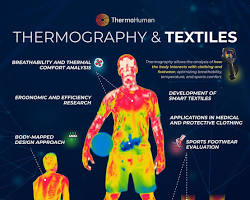
One of the most established forms of Thermal Technologies is infrared thermal imaging. A thermal camera uses infrared-sensitive detectors to transform heat radiation into an image. Different areas of the image can represent different temperature levels, allowing an operator to visually locate unusual heat patterns.
Thermal imaging has applications in industrial inspections, building diagnostics, firefighting, scientific research, and other fields. For example, an electrical component that is operating at an abnormal temperature can appear as a hotspot before a visible failure occurs.
How Infrared Thermal Technologies Work
A thermal imaging system generally uses optics to focus infrared radiation onto a detector. The detector converts the received energy into electrical signals, and processing software converts those signals into a thermal image.
Modern systems can use different detector technologies and wavelength ranges depending on their intended application. Thermal cameras may use cooled or uncooled detectors, with the appropriate choice depending on sensitivity, speed, cost, and application requirements.
Smart Infrared Sensor Technologies
Another important category of Thermal Technologies involves compact infrared sensors. Unlike a full thermal camera, some sensors can focus on detecting specific temperature changes without generating a detailed image.
These sensors can be useful when a system simply needs to know whether a temperature has changed. For example, a machine could continuously monitor a component and send an alert when its temperature moves outside an expected range.
This approach can make thermal monitoring easier to integrate into smart devices, industrial equipment, security systems, and automated monitoring platforms.
Thermal Technologies for Continuous Monitoring
Continuous thermal monitoring can be especially useful in environments where equipment operates for long periods. Instead of waiting for a technician to perform a manual inspection, connected sensors can collect temperature information continuously.
When combined with software, this information can become part of a larger predictive-maintenance system. Historical temperature patterns can be compared with new readings to identify unusual changes.
AI-Powered Thermal Technologies
The combination of artificial intelligence and Thermal Technologies is creating another major development. A thermal camera can produce large amounts of temperature-related visual information, but software can help identify patterns within that information.
AI systems can potentially be trained to recognize abnormal thermal patterns, classify objects, detect hotspots, or identify changes across repeated inspections. This can help transform thermal imaging from a simple visualization tool into a more automated monitoring system.
For industrial environments, this could mean continuously checking equipment and highlighting areas that deserve human attention. NIST research has also emphasized objective performance measurements for thermal imaging systems, including thermal sensitivity, spatial resolution, and temperature-related performance metrics.
Thermal Technologies for Smart Buildings
Thermal Technologies can also help buildings become more energy-aware. Infrared thermography has long been used to identify heat loss, insulation problems, air infiltration, and other building-related thermal issues.
A building may look perfectly normal to the human eye while its thermal image reveals uneven heating or cooling. A thermal inspection can therefore provide another layer of information about how heat moves through walls, roofs, windows, and other structures.
Smart Building Thermal Technologies
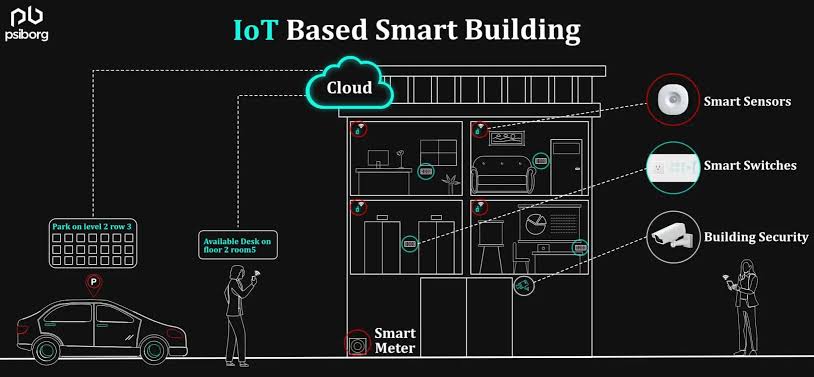
Future smart buildings could combine thermal sensors with HVAC controls and building-management systems. Instead of simply displaying temperature information, these systems could use thermal data to identify unusual heat patterns and help operators understand where energy is being lost.
This makes Thermal Technologies particularly interesting for energy-efficient buildings and automated facility management.
Thermal Technologies for Industrial Monitoring
Factories contain machines, electrical systems, motors, bearings, transformers, furnaces, and other equipment that can produce important thermal signatures. Thermal Technologies can provide a non-contact way to inspect these systems.
Infrared thermography has been used for industrial heat-loss analysis and for detecting issues involving electrical connections, transformers, furnaces, and other equipment.
A major advantage is that inspection can sometimes be performed without physically touching the equipment. Thermal information can therefore complement traditional maintenance methods.
Predictive Maintenance with Thermal Technologies
When thermal measurements are collected repeatedly, they can create a history of equipment behavior. A gradual temperature increase may become an important signal that something has changed.
This does not mean every hotspot automatically represents a failure. Environmental conditions, material properties, load, measurement distance, emissivity, and sensor performance can all affect thermal readings. Proper interpretation and follow-up inspection remain important.
Thermal Technologies for Fire and Safety
Fire detection is another area where Thermal Technologies can provide valuable information. Thermal imagers can help first responders identify hot areas, track fire development, and locate people or routes in difficult visibility conditions. NIST has studied thermal imaging performance specifically for firefighting and first-responder applications.
Traditional visual cameras can struggle when visibility is poor, while thermal imaging can continue detecting infrared energy under many conditions. However, thermal systems also have limitations, including detector saturation and challenges caused by certain environmental conditions.
Thermal Technologies for Vehicles and Robotics
Modern Thermal Technologies are also becoming relevant to vehicles and robots. Autonomous systems need sensors that can understand their surroundings under different lighting conditions.
Thermal sensing can provide another type of environmental information that complements visible cameras, radar, and other sensors. In robotics, thermal information could help machines identify heat sources, monitor equipment, or operate in environments where visible-light information is limited.
The future could bring smaller thermal sensors that are integrated directly into robotic platforms, drones, vehicles, and inspection machines.
Comparison of Thermal Technologies
| Thermal Technology | Main Function | Potential Use |
|---|---|---|
| Infrared Thermal Imaging | Creates heat-based images | Inspection and diagnostics |
| Smart IR Sensors | Detect temperature changes | IoT and automation |
| AI Thermal Analysis | Finds thermal patterns | Automated monitoring |
| Building Thermography | Maps heat differences | Energy and building inspection |
| Industrial Thermography | Finds abnormal hotspots | Predictive maintenance |
| Thermal Safety Systems | Detects heat and fire patterns | Firefighting and safety |
| Robotic Thermal Sensing | Adds thermal awareness | Robots and autonomous systems |
The table shows how different Thermal Technologies can serve different purposes. Some are designed mainly for imaging, while others focus on compact sensing, automation, or specialized inspection.
Thermal Technologies: Illustrative Technology Potential
The following chart is illustrative, not a measurement of real-world market performance. It simply compares the relative breadth of possible application areas discussed in this article.
Future of Thermal Technologies
The future of Thermal Technologies will likely focus on smaller sensors, better sensitivity, smarter software, and easier integration. NIST research published in 2025 describes an advanced heat-based sensor designed for applications including infrared imaging, environmental monitoring, medical diagnostics, satellite radiation measurements, and industrial quality control.
AI may also make thermal information easier to interpret. Instead of requiring an expert to examine every thermal image manually, intelligent software could identify unusual patterns and prioritize areas for further inspection.
Another important direction is sensor miniaturization. Smaller thermal components could make it easier to integrate heat detection into drones, robots, industrial machines, smart buildings, vehicles, and connected devices.
Challenges of Thermal Technologies
Despite their advantages, Thermal Technologies are not perfect. Thermal measurements can be affected by surface properties, environmental conditions, sensor sensitivity, distance, viewing angle, and the temperature range being measured.
Thermal cameras also differ significantly in performance. Important specifications can include spatial resolution, field of view, thermal sensitivity, temperature range, and spectral response.
Another challenge is interpretation. A hotspot does not automatically identify the cause of a problem. It may indicate an issue that requires additional testing, which is why thermal inspection is often most useful when combined with other diagnostic methods.
Conclusion
Thermal Technologies are turning invisible heat into useful digital information. From infrared thermal cameras and compact sensors to AI-powered analysis, smart buildings, industrial maintenance, firefighting, vehicles, and robotics, these technologies are expanding the ability of machines to understand temperature.
The most exciting development is the movement from simple heat measurement toward intelligent thermal awareness. As sensors become smaller and software becomes more capable, Thermal Technologies could become an increasingly important part of connected machines and smart environments.
For technology researchers and businesses looking for specialized, lower-competition topics, thermal sensing is also an interesting area because it connects infrared physics, AI, IoT, industrial automation, energy efficiency, and robotics in one emerging technology field.