Digital Twin Technologies are transforming the way physical objects are designed, monitored, tested, and improved. From factory machines and electric vehicles to smart buildings and large infrastructure, these technologies create digital representations that can reflect the condition and behavior of real-world objects. By combining sensors, real-time data, cloud computing, and advanced analytics, Digital Twin Technologies allow engineers and businesses to understand physical systems without relying only on traditional inspections or testing.
The growing use of connected devices is making this technology even more useful. A digital twin can receive information from a physical object and use that information to create a continuously updated digital representation. This can help organizations study performance, identify unusual behavior, test possible changes, and plan maintenance. For industries looking for smarter and more efficient ways to manage complex equipment, Digital Twin Technologies are becoming an increasingly important technology trend.
Table of Contents
- What Are Digital Twin Technologies?
- Digital Twin Technologies for Smart Manufacturing
- Digital Twin Technologies for Smart Buildings
- Digital Twin Technologies for Vehicles
- Digital Twin Technologies for Industrial Equipment
- Digital Twin Technologies for Healthcare Objects
- Digital Twin Technologies for Infrastructure
- Benefits of Digital Twin Technologies
- Future of Digital Twin Technologies
- Conclusion
What Are Digital Twin Technologies?
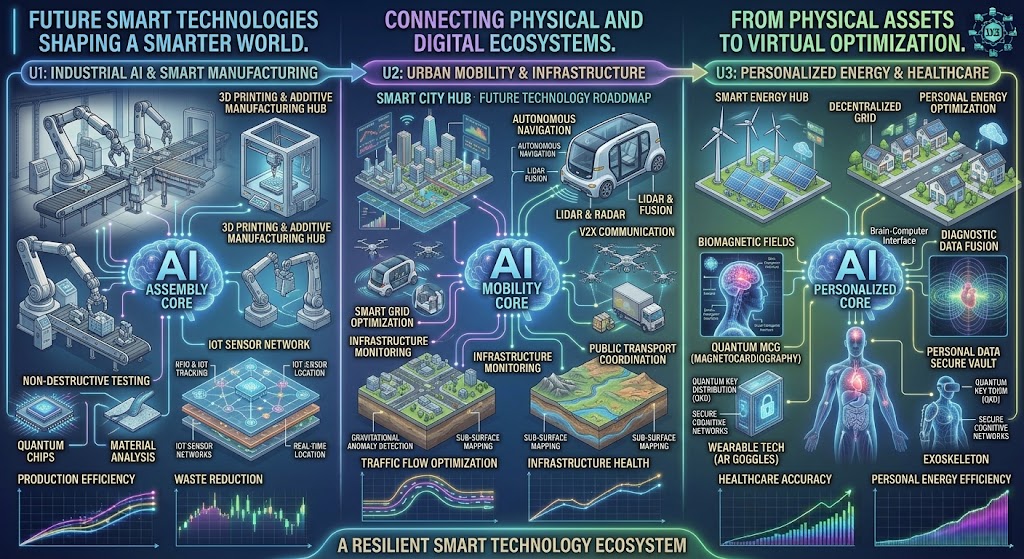
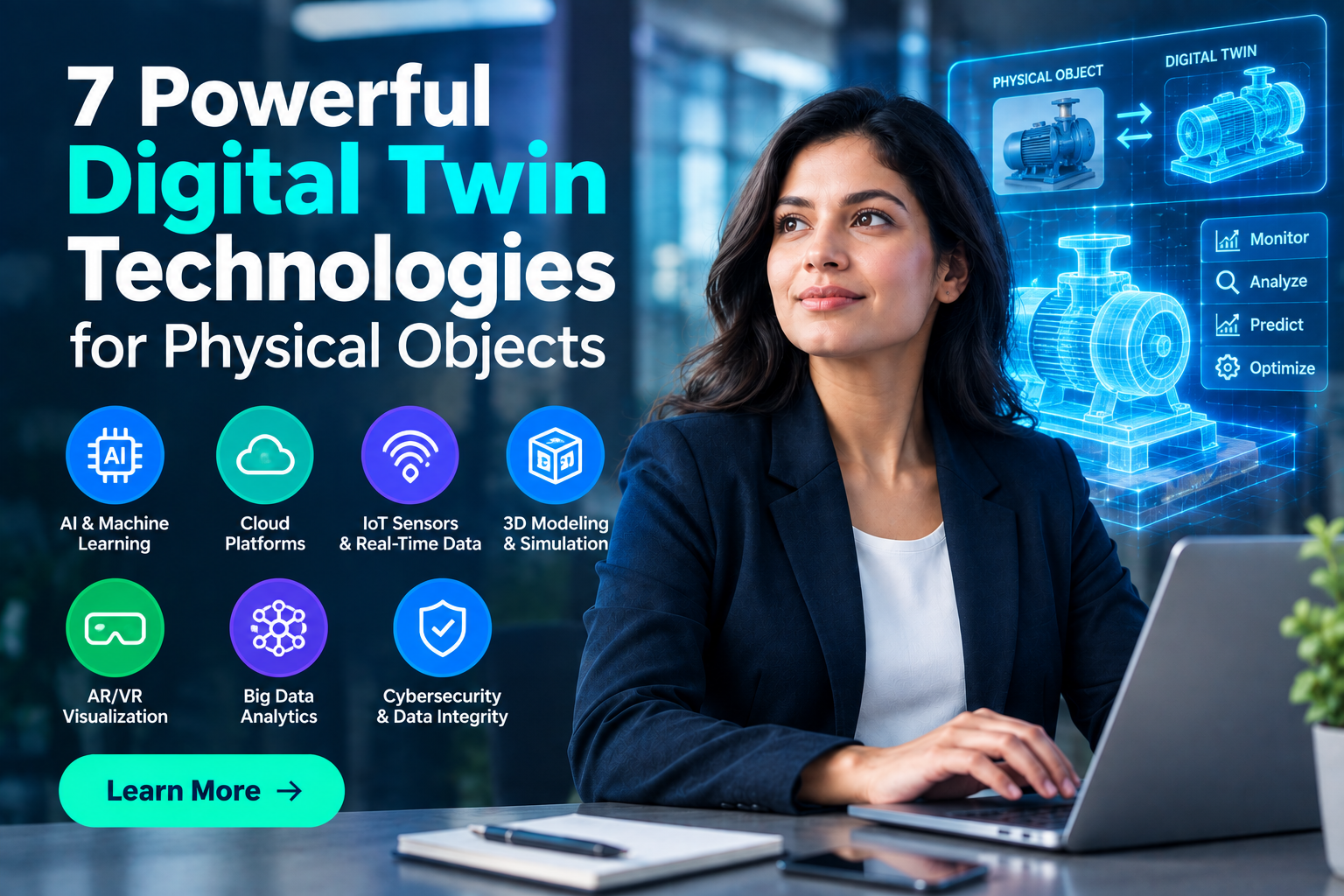
Digital Twin Technologies create a digital representation of a physical object, system, or environment and connect that representation with information from the real world. Sensors can collect information such as temperature, pressure, movement, vibration, speed, or energy consumption. That information can then be analyzed by software to provide a clearer picture of what is happening to the physical object.
A digital twin is more than a simple 3D model. A 3D model mainly represents the appearance or structure of something, while a digital twin can incorporate operational information. When connected to sensors and data systems, it can change as the condition of the physical object changes.
For example, consider a large industrial machine operating continuously inside a factory. Engineers may use sensors to collect information about vibration, temperature, pressure, and operating speed. The digital twin can use that information to represent the machine’s current condition and help engineers investigate unusual changes.
This connection between the physical and digital worlds is what makes Digital Twin Technologies particularly useful for modern industries.
Digital Twin Technologies for Smart Manufacturing
Manufacturing is one of the major areas where Digital Twin Technologies can provide practical value. Modern factories contain complex machines, robotic systems, production lines, sensors, and software. A digital twin can bring information from these different components into one digital environment.
Engineers can use this environment to study how machines operate and how different parts of a production system interact. Instead of making every change directly on a physical production line, companies can first examine potential changes through a digital representation.
This can help manufacturers investigate production bottlenecks, equipment behavior, energy consumption, and possible operational improvements. It can also make the design stage more data-driven because engineers can evaluate different configurations before building or modifying physical equipment.
Digital Twin Technologies for Predictive Maintenance
One of the most interesting applications of Digital Twin Technologies is predictive maintenance. Traditional maintenance may follow a fixed schedule, meaning equipment is inspected or serviced after a certain amount of time or usage.
Predictive maintenance focuses more closely on the actual condition of equipment. Sensors can continuously collect information, while a digital twin can help engineers identify changes from normal operating patterns.
If vibration or temperature begins to behave differently, engineers can investigate the situation before a small problem potentially develops into a larger equipment failure. The digital twin does not guarantee that every failure can be predicted, but it can provide valuable information for maintenance planning.
Digital Twin Technologies for Smart Buildings
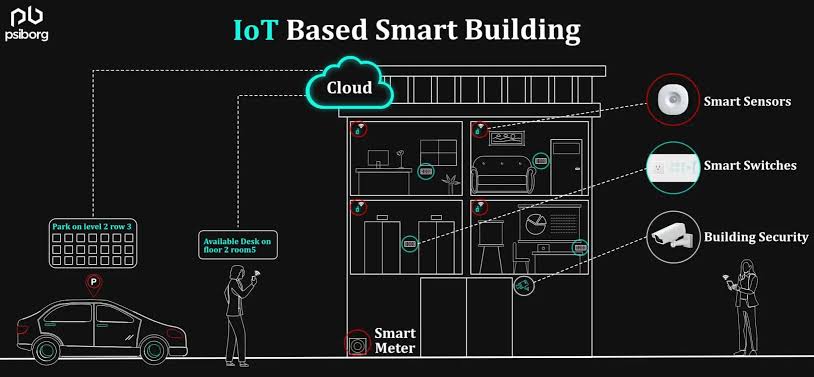
Buildings are becoming increasingly connected through smart lighting, heating systems, cooling equipment, elevators, security systems, energy meters, and environmental sensors. This makes buildings another important application for Digital Twin Technologies.
A digital twin can combine information from these systems into a digital representation of the building. Building managers can then examine how different systems operate and how they affect one another.
For example, if energy consumption suddenly increases, the digital twin may help operators investigate whether heating, cooling, lighting, or another system is responsible. It can also help engineers understand how changes in building usage affect energy performance.
Digital Twin Technologies for Energy Management
Energy management is becoming increasingly important as organizations try to operate buildings more efficiently. Digital Twin Technologies can provide a detailed view of how energy moves through different parts of a building.
Engineers can use digital models to examine possible changes before applying them in the physical environment. They might investigate different equipment settings, ventilation schedules, or occupancy patterns and compare their potential effects.
The technology itself does not automatically reduce energy consumption. Instead, it provides data and modeling capabilities that can help building operators make more informed technical decisions.
Digital Twin Technologies for Vehicles
Modern vehicles contain many electronic systems and sensors, making them suitable for Digital Twin Technologies. Cars, buses, trains, aircraft, and industrial vehicles can generate large amounts of operational data.
A digital twin can represent information such as vehicle speed, temperature, vibration, battery condition, energy consumption, and component performance. Engineers can then use this digital representation to study vehicle behavior over time.
Electric vehicles are particularly interesting because battery performance can change depending on temperature, charging patterns, driving conditions, and usage. Digital twins can help engineers analyze these factors and investigate how battery systems behave under different conditions.
Digital Twin Technologies for Transportation
The technology can also move beyond individual vehicles. Transportation organizations can potentially create digital representations of fleets, railway systems, airports, charging networks, or other connected transportation environments.
This allows engineers to examine interactions between multiple components instead of studying each component separately. A digital model of a transportation system could help organizations investigate operational scenarios before making physical changes.
Digital Twin Technologies for Industrial Equipment
Large industrial machines can be expensive, complex, and difficult to inspect regularly. Digital Twin Technologies can provide another way to monitor these assets by combining sensor information with digital models.
Equipment such as turbines, pumps, compressors, generators, and specialized industrial machines can produce continuous streams of operational information. A digital twin can organize this data and provide engineers with a clearer representation of equipment behavior.
This can be especially useful when machines operate in remote locations or difficult environments.
Digital Twin Technologies for Remote Monitoring
Remote monitoring is one of the practical advantages of Digital Twin Technologies. Engineers may not need to physically visit a machine every time they want to examine basic operating information.
Connected sensors can send information to a digital environment, allowing teams to investigate performance remotely. When unusual patterns appear, engineers can determine whether a physical inspection is necessary.
This approach can potentially reduce unnecessary site visits while giving technical teams access to more continuous information about important equipment.
Digital Twin Technologies for Healthcare Objects
Healthcare is another developing area for Digital Twin Technologies. The concept can be applied to medical equipment, hospital systems, laboratory devices, and other physical healthcare environments.
For medical equipment, digital twins could help engineers understand equipment behavior, maintenance requirements, and operational conditions. Hospitals could also use digital representations to study how equipment is being used throughout a facility.
More advanced applications may involve highly personalized digital models for biological systems. However, these applications require careful validation, privacy protection, cybersecurity, and regulatory oversight.
Digital Twin Technologies for Medical Equipment
Medical devices can be expensive and technically complex. A digital twin could help engineers monitor equipment performance and investigate potential maintenance requirements.
For example, information from connected medical equipment could be represented digitally so technical teams can examine operating conditions without immediately interrupting the device.
These systems should support qualified professionals rather than replace expert judgment, particularly when technology is used in safety-critical healthcare environments.
Digital Twin Technologies for Infrastructure
Infrastructure such as bridges, tunnels, railways, roads, power systems, and water networks can benefit from long-term monitoring. Digital Twin Technologies can create digital representations of these assets and connect them with information from sensors, inspections, and maintenance records.
A bridge, for example, can experience changes caused by traffic, weather, temperature, vibration, and aging. Sensors can collect information about some of these conditions, while a digital twin can help engineers organize and analyze the information.
This can create a more detailed digital record of how infrastructure changes over time.
Digital Twin Technologies for Infrastructure Monitoring
Infrastructure projects are often expected to operate for decades. Continuous monitoring can therefore become an important part of maintenance planning.
Digital Twin Technologies can combine historical information with new sensor readings, allowing engineers to investigate trends and unusual changes. When digital models are combined with physical inspections, they can provide another layer of information for infrastructure management.
Digital Twin Technologies Across Different Industries
| Application Area | Physical Object | Main Digital Twin Use |
|---|---|---|
| Manufacturing | Factory machines | Performance monitoring |
| Buildings | Smart building systems | Energy analysis |
| Transportation | Cars and trains | Operational monitoring |
| Industry | Turbines and pumps | Condition analysis |
| Healthcare | Medical equipment | Maintenance analysis |
| Infrastructure | Bridges and roads | Structural monitoring |
| Energy | Power equipment | Performance analysis |
Illustrative digital twin application scope
Illustrative values showing the range of possible applications across sectors. These are not market-size statistics.036912ManufacturingBuildingsTransportationIndustrial EquipmentHealthcareInfrastructure
Values are for visual comparison only.
Benefits of Digital Twin Technologies
One major advantage of Digital Twin Technologies is the ability to connect physical objects with digital information. Instead of looking at an asset only during occasional inspections, organizations can potentially receive a more continuous view of its operating condition.
Another benefit is digital testing. Engineers can investigate possible modifications in a virtual environment before applying them to expensive or complex physical equipment. This can help reduce unnecessary physical experiments and provide additional information during the design process.
Remote monitoring is another important benefit. When equipment is located far away, connected sensors and digital models can allow technical teams to examine information without immediately traveling to the physical site.
Digital Twin Technologies can also support better documentation. A digital representation can bring together information about an asset’s design, operation, maintenance, and historical behavior.
However, digital twins also have limitations. Creating an accurate system can require sensors, software, connectivity, cloud infrastructure, cybersecurity, and specialized technical knowledge. Data quality is particularly important because inaccurate or incomplete information can reduce the reliability of a digital representation.
Future of Digital Twin Technologies
The future of Digital Twin Technologies will likely be influenced by advances in artificial intelligence, edge computing, sensors, cloud platforms, and real-time data processing.
As these technologies develop, digital twins may become more detailed and responsive. Instead of representing one isolated object, future systems could connect multiple digital twins together.
For example, a digital twin of an electric vehicle could potentially interact with digital representations of roads, charging stations, traffic systems, weather conditions, and transportation infrastructure.
Digital Twin Technologies and Artificial Intelligence
Artificial intelligence can add another layer of analysis to Digital Twin Technologies. AI systems can process large quantities of sensor data and identify patterns that may be difficult to recognize manually.
An AI-enhanced digital twin could help engineers investigate unusual equipment behavior, compare different operating scenarios, or identify changes that require further attention.
However, AI predictions should still be checked against real-world information. A sophisticated digital model cannot compensate for inaccurate sensors, incomplete data, or an incorrect representation of the physical system.
Digital Twin Technologies and Real-Time Computing
Edge computing could also make Digital Twin Technologies more responsive. Instead of sending every piece of sensor information to a distant cloud server, some processing can occur closer to the physical equipment.
This can potentially reduce delays when systems need to respond quickly. For industrial machines, vehicles, and other time-sensitive environments, faster processing can be particularly useful.
Conclusion
Digital Twin Technologies are creating a stronger connection between physical objects and digital environments. From manufacturing machines and smart buildings to vehicles, industrial equipment, healthcare devices, and infrastructure, digital twins can help organizations understand complex physical systems in greater detail.
The real value of Digital Twin Technologies is not simply creating a digital copy. Their potential comes from connecting that representation with real-world data and using it to monitor performance, investigate problems, test scenarios, and support engineering decisions.
As sensors, artificial intelligence, cloud computing, and connected devices continue to advance, Digital Twin Technologies could become an increasingly important part of how physical products and infrastructure are designed, operated, monitored, and maintained.